Picture two boxes of cereal side by side. One has a famous cartoon mascot and a famous price. The other has a plain label, a nearly identical shape and a price that’s noticeably lower. Which do you grab?
Why store brands cost less
Store brands (also called private labels) skip a lot of the costs that big brands carry:
- Advertising. No TV commercials, celebrity endorsements or mascots on salary.
- Fancy packaging. Simpler boxes and labels cost less.
- Shelf deals. Name brands often pay for prime shelf placement and promotions.
Many store-brand products are made by established food manufacturers under contract, sometimes by companies that also make well-known brands. Stores don’t usually say who makes what, but the products are often very close.
Where store brands shine
People commonly report little to no difference with basics like:
- Sugar, flour, salt and baking soda
- Canned vegetables and beans
- Frozen vegetables
- Milk and eggs
- Over-the-counter medicine (check that the active ingredients and amounts match)
Where loyalty might be worth it
Taste is personal. Some folks swear by a particular ketchup, peanut butter or soda, and that’s fine! If you truly prefer the name brand, it may be worth the extra. The trick is knowing whether you’re paying for taste or just for habit.
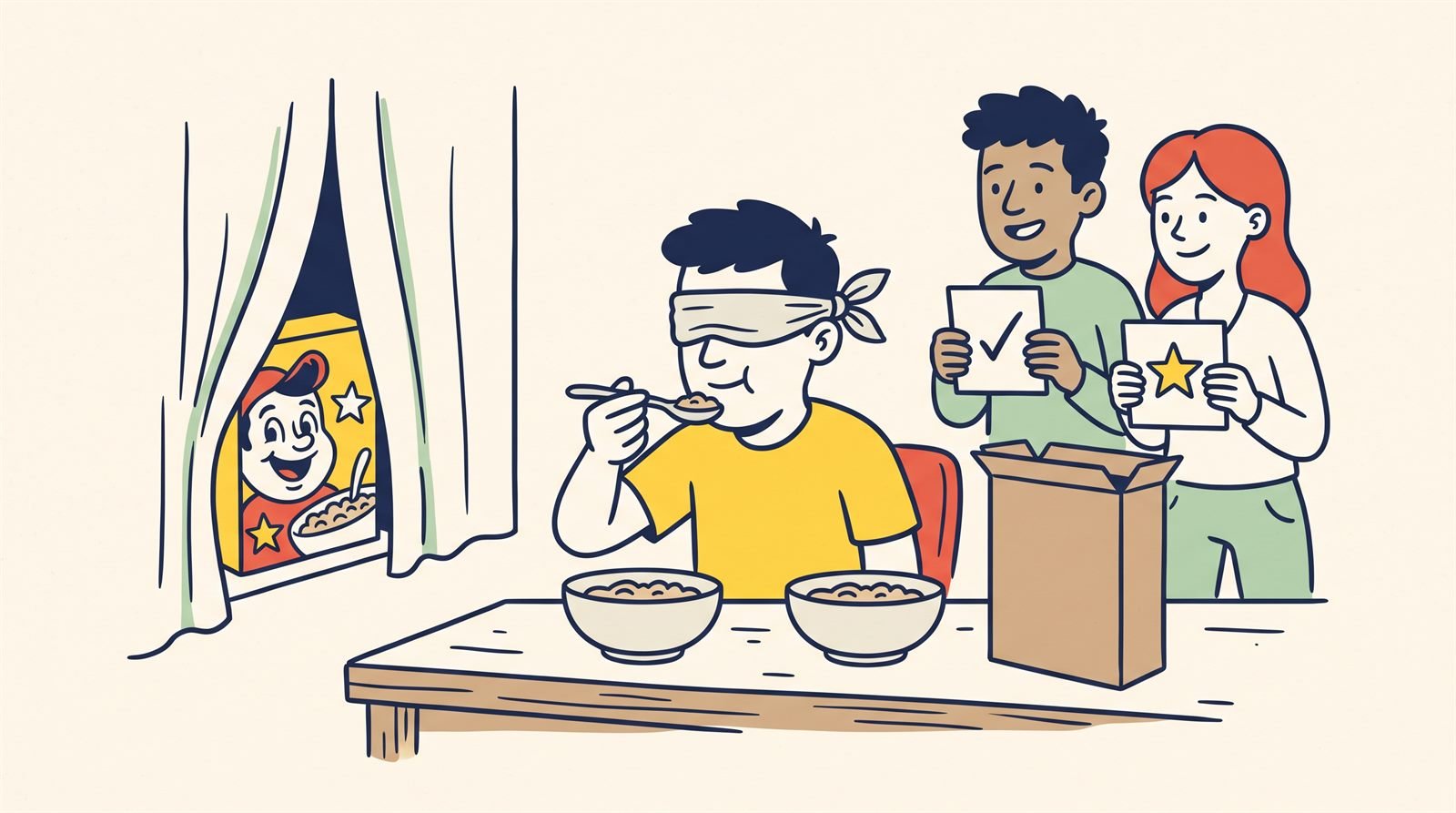
Run your own taste-off
Here’s a fun experiment: buy a store-brand and name-brand version of something your family loves. Hide the labels. Serve both. Vote. You might be surprised, and you might save a nice chunk every week.
The bottom line
Store brands are one of the easiest grocery wins around. Try them on the basics, keep the name brands where they really matter to you, and let the unit price be your referee. (Store brands are also a great hedge against shrinkflation.)
Wear the idea
This story has a t-shirt idea in the works: “Generic and Proud”. Original price-humor tees from our sister site live at nice-tshirt.com.